Every morning, before your Green3r pickup arrives, you do something small — you separate your kitchen scraps from your plastic wrappers and paper. It takes 30 seconds. It feels insignificant.
It isn't.
Why mixing waste is the root of the problem
When wet and dry waste mix together, something irreversible happens: the entire batch becomes difficult — sometimes impossible — to recycle. That plastic bottle that could have been reborn as a park bench? Covered in food residue, it's now headed to a landfill.
Green Fact
India generates over 62 million tonnes of municipal solid waste every year. Less than 20% is processed or recycled. The biggest reason? Waste arrives at facilities already mixed.
Landfills in Delhi NCR are reaching capacity. Ghazipur, one of the largest, is taller than the Qutub Minar. Okhla and Bhalswa aren't far behind. The solution isn't just better technology at the facility — it starts at your door.
The two bins you need
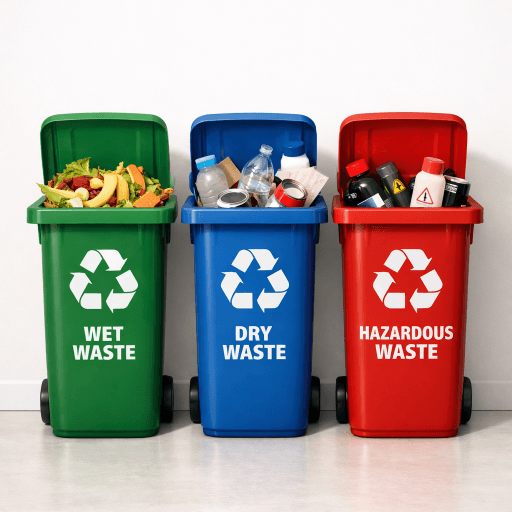
You don't need five bins, colour-coded systems, or a degree in environmental science. Start with just two:
Wet waste — Anything that was once alive and will decompose. Kitchen scraps, vegetable peels, leftover food, tea leaves, flowers.
Dry waste — Everything else that's clean and dry. Paper, cardboard, plastic bottles, glass, metal, fabric, e-waste.
Tip
A quick test: if it smells or will rot within a week, it's wet waste. Everything else is dry.
What happens after your Green3r pickup
When you segregate, your wet waste goes to composting facilities where it becomes fertiliser for farms and gardens. Your dry waste is sorted further and routed to appropriate recycling streams — paper mills, plastic recyclers, scrap dealers.
60%
of household waste is wet
3x
more recyclable when segregated
50+
pickups by Green3r
When waste arrives mixed, none of this is possible. The sorting has to happen manually at the facility — slow, expensive, and often incomplete.
Building the habit
The hardest part isn't the segregation itself — it's remembering the first few days. Here's what works:
- Place your two bins side by side, not in separate rooms
- Put a small laminated cheat sheet above the bins for the first week
- Rinse bottles and cans before putting them in dry waste — it takes 5 seconds
After two weeks, it becomes automatic. Like washing your hands before eating.
Start today. Your pickup is already scheduled. All that needs to change is which bin the banana peel goes into.
🌱 Green3r App
Schedule your first pickup — it takes under a minute
Download on iOS & Android · Delhi NCR & nearby cities