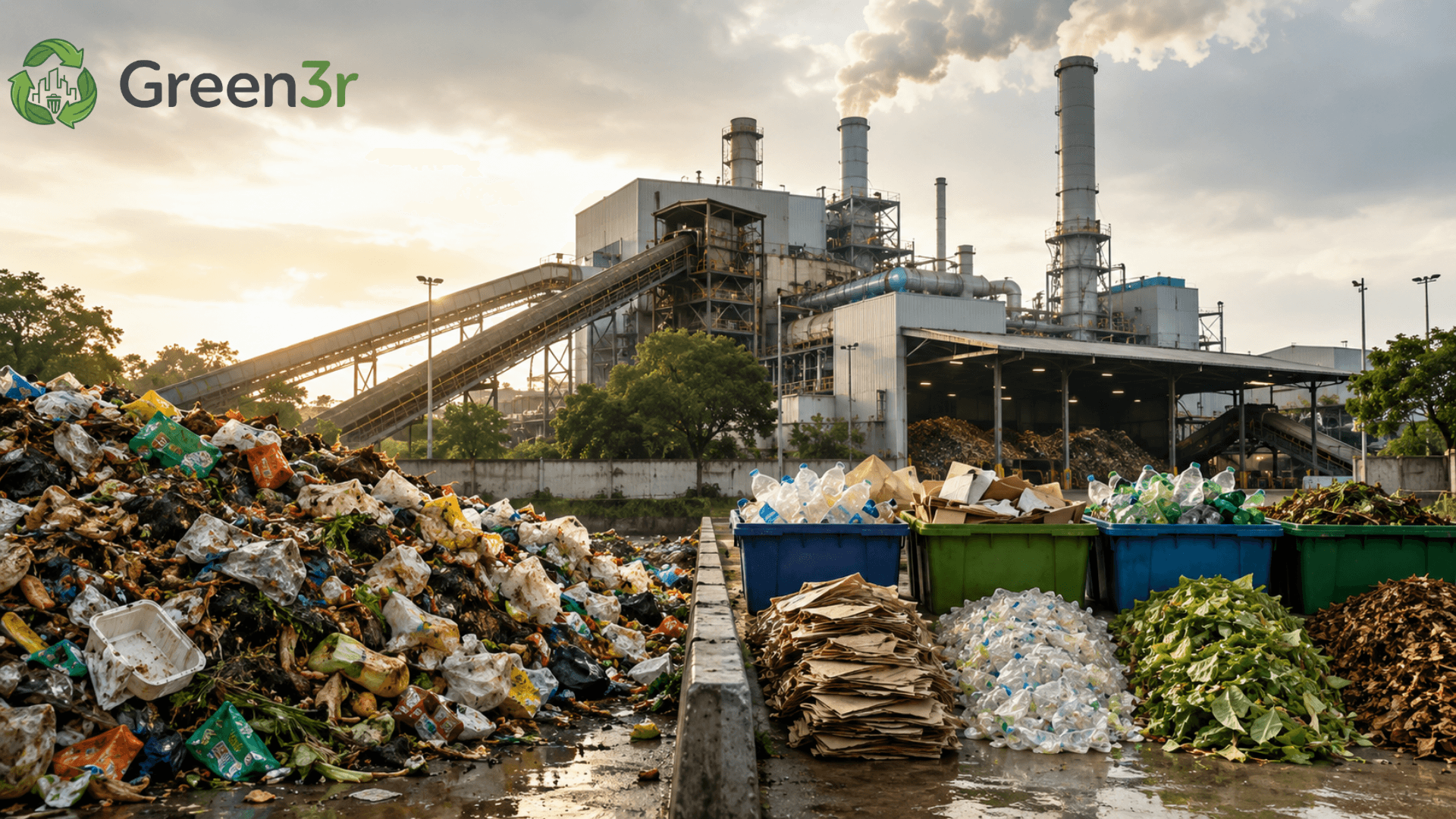
India has spent thousands of crores building waste-to-energy plants. Together, India’s operational WtE plants can process thousands of tonnes of municipal waste every day and generate electricity from it. On paper, this is exactly the kind of infrastructure a fast-growing country needs: less waste in landfills, more energy from non-recyclable material, and a cleaner route for urban garbage.
But many of these plants are not performing the way they were designed to. The bigger problem is what arrives at the plant gate every morning: wet, rotting, mixed waste that no combustion system was built to handle efficiently.
We built advanced waste infrastructure. Then we kept feeding it the same mixed garbage we always did.
What these plants were built to do
Waste-to-energy plants are not meant to burn every kind of garbage equally. They work best with dry, combustible waste such as non-recyclable plastic, paper, packaging material, textiles, and other high-calorific waste. Calorific value simply means how much usable energy a material can release when burned.
Dry plastic and paper can release energy. Wet food waste does the opposite: it absorbs heat. That difference matters because a waste-to-energy plant needs a consistent, dry, energy-rich feedstock to keep combustion stable.
Under India’s waste rules, non-recyclable waste with a calorific value of 1500 Kcal/kg or more should not simply be sent to landfill. It should be used for energy recovery, including through RDF or waste-to-energy systems. RDF, or Refuse Derived Fuel, is the dry combustible portion of waste that can be processed and used as fuel.
India’s newer Solid Waste Management Rules push this direction further. They require better segregation at source and prescribe a gradual rise in RDF-based fuel substitution for industries using solid fuel. This is serious policy, but policy can only work if the waste entering the system is usable.
And that is where the problem begins.
The number that explains the failure
For a waste-to-energy plant to work well, the waste it receives needs enough calorific value. Dry, segregated waste can reach that level because plastic, cardboard, paper, and dry textiles are energy-dense. They burn more consistently and support stable combustion.
Wet organic waste is the opposite. Vegetable peels, leftover food, tea leaves, fruit waste, and kitchen scraps carry moisture. When they enter the combustion stream, they pull the energy value down. The system then has to spend more energy drying and burning the load instead of producing useful energy from it.
That means lower output, higher operating stress, and more difficulty staying within emission limits. This is why source segregation matters. A dry plastic container that stays separate from food waste can still be processed. The same container, once mixed with wet kitchen waste, becomes dirty, heavier, harder to sort, and less useful.
Green Fact
Waste with higher calorific value is meant for energy recovery, not landfilling. But that only works properly when the waste is dry and separated before it enters the system.
Think waste-to-energy is just about burning garbage? Test yourself below.
Test what you just learned
A quick check before you continue reading.
Card 1 of 3
What mixed waste does inside a plant
Unsegregated waste does not create one problem. It creates a chain reaction. First, combustion becomes unstable because wet organic waste absorbs heat. The plant has to work harder to maintain the temperature needed for safe and efficient burning. When the feedstock is too wet or inconsistent, the system becomes less efficient.
Second, emissions become harder to control. Mixed waste can lead to incomplete combustion, which increases pollution-control pressure and makes it harder for plants to stay within emission standards. A plant may have the right machinery, but if the input material is poor, the process becomes harder to manage.
Third, contamination damages operations. Metal pieces, glass, stones, and other wrongly mixed materials can jam conveyors, damage equipment, and slow down processing. Even when plants use mechanical sorting, removing contamination from compressed, wet, partly decomposed waste is difficult.
Fourth, sorting becomes expensive. Plants do sort incoming waste, but sorting inside a facility is not the same as separating fresh waste at home. At home, dry waste is still clean. At the plant, it may already be mixed with food, liquids, dust, sanitary waste, and broken materials.
By then, paper is soaked. Plastic is contaminated. Food residue sticks to packaging. What could have been recovered cleanly now needs extra labour, extra machines, and extra cost. Every tonne of waste that should have arrived separated is now processed twice: once to sort it, and again to burn or recover what remains.
And both steps become worse than they should be.
1500
Kcal/kg threshold above which waste should be used for energy recovery
4
waste streams required under newer segregation rules
2
basic bins that protect wet and dry waste quality at home
The economics are already difficult
Waste-to-energy plants are not easy businesses. They exist because landfill diversion is a public necessity. Cities cannot keep dumping endlessly. Land is limited, dumpsites are overflowing, and unmanaged waste creates pollution, methane, fire risk, and public-health issues.
But WtE plants need consistent feedstock to make sense. When the incoming waste is too wet or too mixed, the plant produces less energy from the same amount of garbage. Operating costs rise, sorting costs rise, and maintenance issues increase.
So the plant becomes less viable. This is the uncomfortable truth: the economics of waste-to-energy are already difficult, and mixed waste makes them worse.
Tip
Waste-to-energy plants are not a replacement for segregation. They depend on segregation. A plant can only recover energy efficiently when the incoming waste is dry enough, clean enough, and consistent enough to process.
This is not only a citizen problem
It is easy to blame households. People do not segregate, so the plants fail. That is partly true, but not complete. The waste system has more than one actor, and every actor affects what finally reaches the plant.
Urban local bodies are responsible for collection. In many cities, separate bins may exist, but collection still gets mixed during transport. If wet and dry waste are collected together in the same vehicle, the household’s effort is wasted. That creates frustration because when residents separate waste and then see it mixed again, they stop believing the system works.
Regulators also have a role. Waste-to-energy plants need authorisation and monitoring. Input quality, emissions, compliance, and plant performance all need consistent oversight. Industry has a role too. If RDF is becoming part of India’s fuel-substitution plan, industries need predictable, high-quality RDF supply. That cannot happen if cities keep sending contaminated mixed waste downstream.
So yes, the citizen matters, but the citizen is not the only failure point. The system fails when homes do not segregate. It also fails when collection trucks remix separated waste, when plants are judged only by output instead of input quality, and when policy creates targets faster than the ground system changes.
What has to change
India’s newer solid waste rules push segregation at source into clear waste streams such as wet waste, dry waste, sanitary waste, and special care waste. If implemented properly, that one change can transform the quality of waste entering the system.
At home, wet and dry waste must be separated before pickup. This is not a symbolic act. It decides the material quality of the entire waste chain. Once wet food waste mixes with dry plastic or paper, the damage is already done.
At collection, cities must stop mixing separated waste again. Separate bins are meaningless without separate transport. Collection routes, vehicles, staff training, and monitoring need to match the rules.
At the plant level, input quality should be reported more clearly. Plants should not only report what they emit or how much they process. They should also report what they receive: moisture levels, calorific value, contamination, and reject rates. That would make the upstream problem visible.
At the policy level, RDF demand needs clean supply. The RDF substitution target is a good direction, but RDF cannot become reliable industrial fuel if the waste stream remains wet and contaminated. The supply chain has to improve from the first point of generation.
That first point is the bin.
Green Fact
Source segregation protects material value before waste enters the system. Once wet waste mixes with dry waste, recovery becomes harder, costlier, and less effective.
What this means for you
If you are a Green3r user, this is the part that matters most. When you separate dry waste from wet waste, you are not just “doing the right thing.” You are changing the material composition of the waste stream.
Dry plastic that leaves your home clean has a chance to be recycled, recovered, or used properly in an energy system. Wet organic waste, kept separate, can go to composting or biogas. Neither stream ruins the other. That is the basic logic of a working waste system.
The rules provide the mandate. Waste-to-energy plants provide one part of the infrastructure. Collection systems connect homes to processing facilities. But the quality of the entire chain is shaped by what leaves your door every morning.
India is not short of waste policy ambition. It is not short of engineering capability. It is not short of infrastructure investment. What it still lacks is consistent upstream behaviour and reliable collection systems that protect segregation after it happens.
That change is not complicated. It starts with two bins: wet waste separate, dry waste clean and separate, every day.
The plants were built on the assumption that waste would arrive cleaner than it often does. That can change. It starts at your door.
🌱 Green3r App
Keep wet and dry waste separate - Green3r helps your waste enter the right stream
Download on iOS & Android · Delhi NCR & nearby cities